Reveal the tooth structure you need.
Crown lengthening can expose more tooth structure for a restoration or address the appearance of excess gum tissue.
What this care involves.
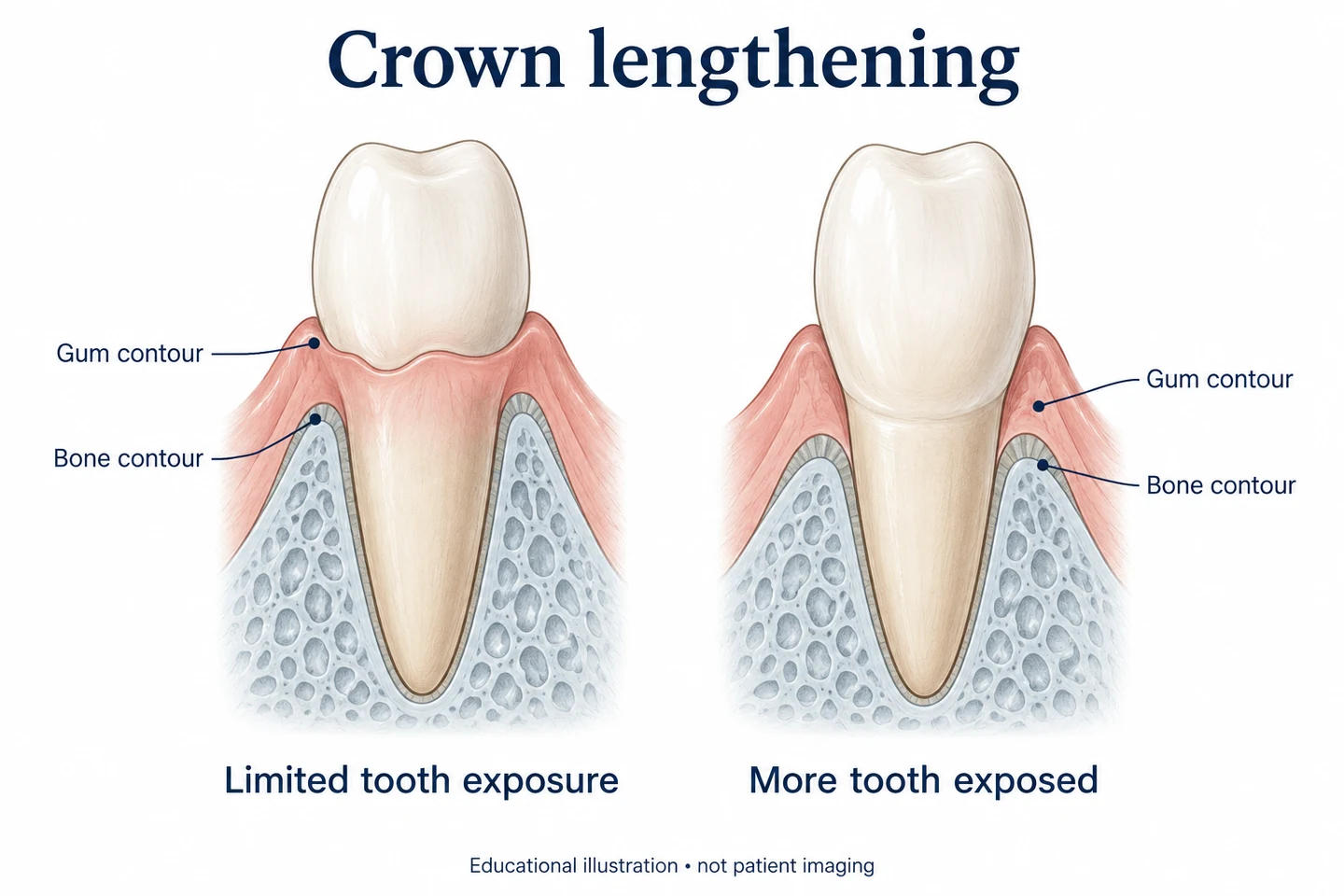
Treatment may involve reshaping the gumline and underlying bone. Your periodontist and restorative dentist coordinate the plan so the healing tissues and planned restoration can be considered together.
For a restoration or the shape of your smile.
Crown lengthening can expose tooth structure when decay or a fracture extends below the gumline, or when a tooth needs more structure to support a restoration. It may also be considered when excess gum tissue makes teeth appear short.
Coordinate gum contours and restorative care.
The procedure may reshape gum tissue and underlying bone. If a crown or veneer is planned, the periodontist and restorative dentist coordinate the sequence and allow the tissues to settle before the final restoration.
Questions you may have.
How does it differ from a gingivectomy?
A gingivectomy addresses gum tissue. Crown lengthening may also involve the underlying bone. The relationship between tooth, gum and bone determines the approach.
When can my final crown be made?
The gums need time to heal and stabilize. Your clinicians will advise when the site is ready rather than promise the same timeline for every patient.
Your next step.
Bring your questions to a consultation with Dr. Aljewari. We will discuss the findings, your choices and the plan for comfort and follow up.